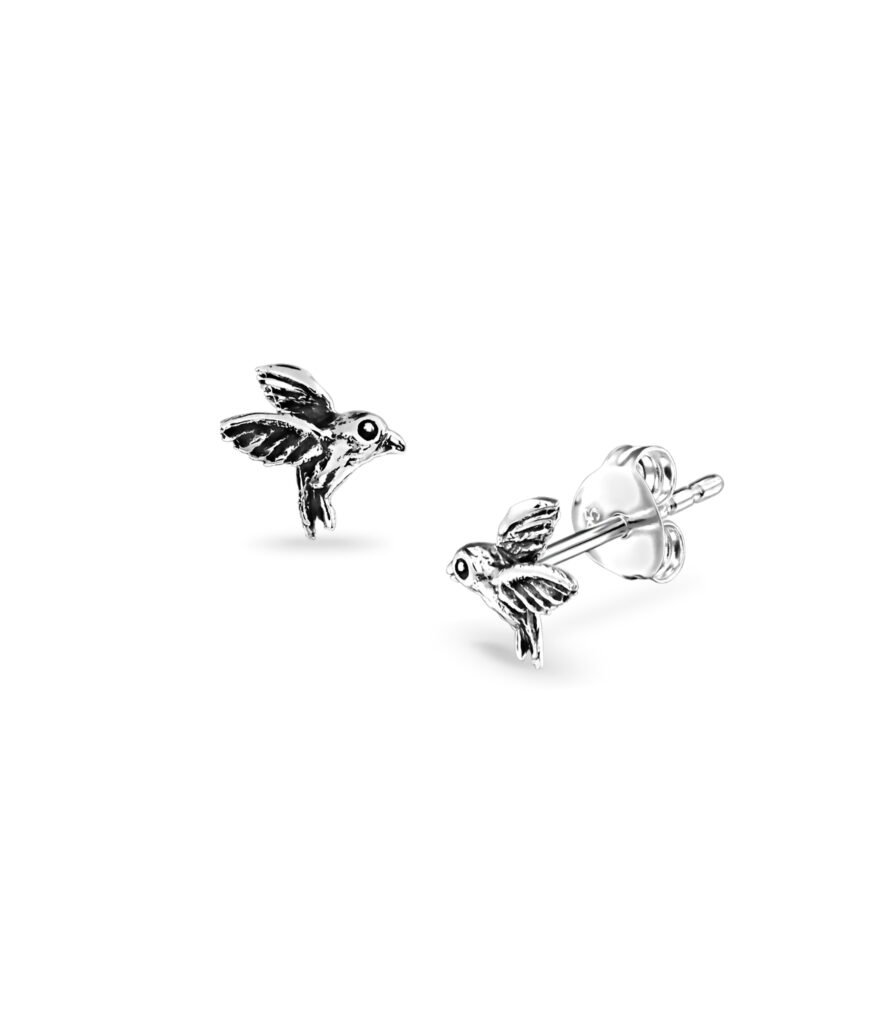
Pre-production sample process & lead time
Perfect the Sample. Scale with Confidence.
Your vision. Your brand. Our responsibility behind every piece.
Brief
3–7 Days
CAD
10–15 Days
Resin Model
1–5 Days
Sample
10–15 Days
Bulk Production
21–45 Days
01
Design &
Brief Confirmation
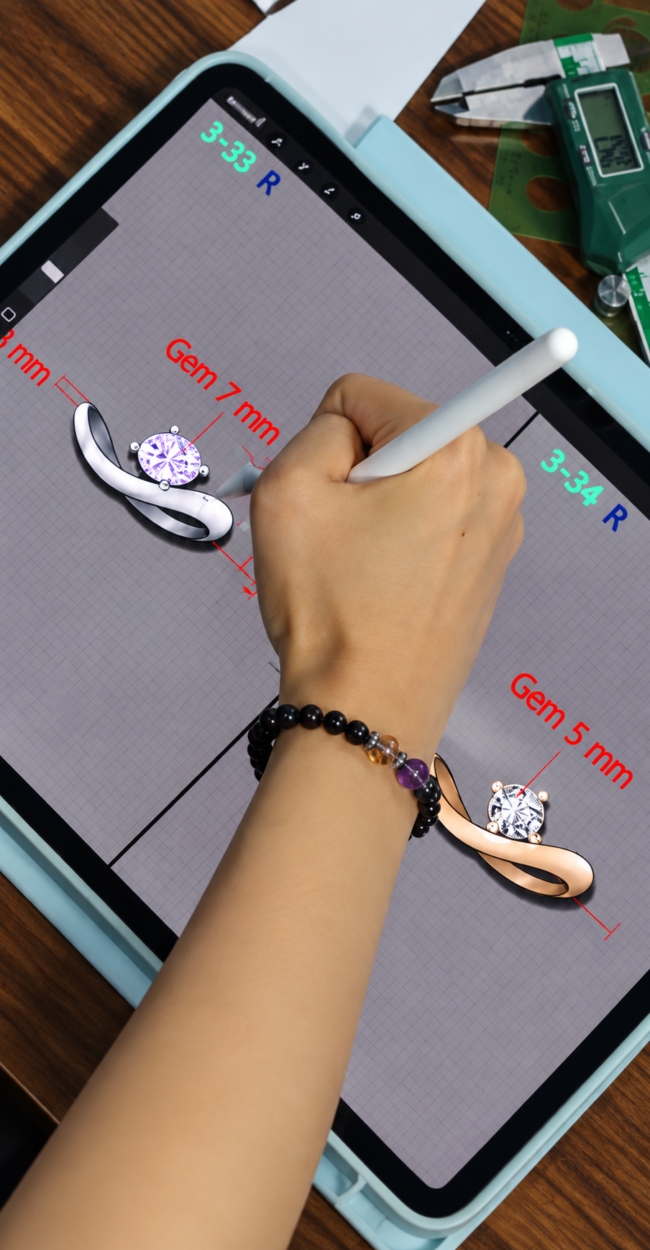
Duration: 3-7 Days
Output: Confirmed specifications and an initial cost estimate before proceeding.
Every successful production starts with a clear understanding of what you want to create.
You can begin by sharing whatever information you already have. This may include a design concept, reference image, sketch, technical drawing, CAD file, existing sample, or an existing product that you would like us to reproduce, improve, or move into production.
At this stage, our team reviews your project and works with you to confirm the key details before technical development begins
- Overall design and appearance
- Product dimensions and proportions
- Metal type
- Stone type and stone sizes
- Construction and assembly
- Plating
- Surface finish
- Functionality
- Quantity
- Target price
- Production method
- Packaging or other production requirements
The purpose of this stage is to make sure both sides understand exactly what is being developed before time and cost are invested in CAD, sampling, or production.
Material & Stone Sourcing
If your design uses commonly available stones, pearls, chains, findings, or materials, sourcing may be relatively straightforward.
However, if you require a specific stone size, unusual color, special shape, uncommon component, custom material, or a very specific price target, sourcing may take longer.
Our team may need to:
- Contact several suppliers
- Compare quality
- Check availability
- Request samples
- Confirm minimum quantities
- Review size or color consistency
- Negotiate pricing
- Test whether the material is suitable for the production process
We do this because choosing a material is not only about finding something that looks similar. It also needs to work with your design, target price, production quantity, and manufacturing process. Our aim is to find the best practical balance between quality, appearance, price, availability, and production reliability.
Why This Matters
The clearer the design direction is at the beginning, the smoother the rest of the development process will be. Small adjustments later are completely normal. However, if the main concept, size, construction, or material direction changes repeatedly during CAD or sampling, the project may need to move backward to an earlier stage. This can create additional development time and unnecessary cost.
For this reason, we encourage customers to establish the main idea, proportions, materials, and functionality as clearly as possible before detailed technical development begins.
Tech Pack (Technical Package) — A detailed product specification sheet that helps us understand exactly how you want your jewelry to be made.
Download Tech-pack Now
02
Cad Review &
Development
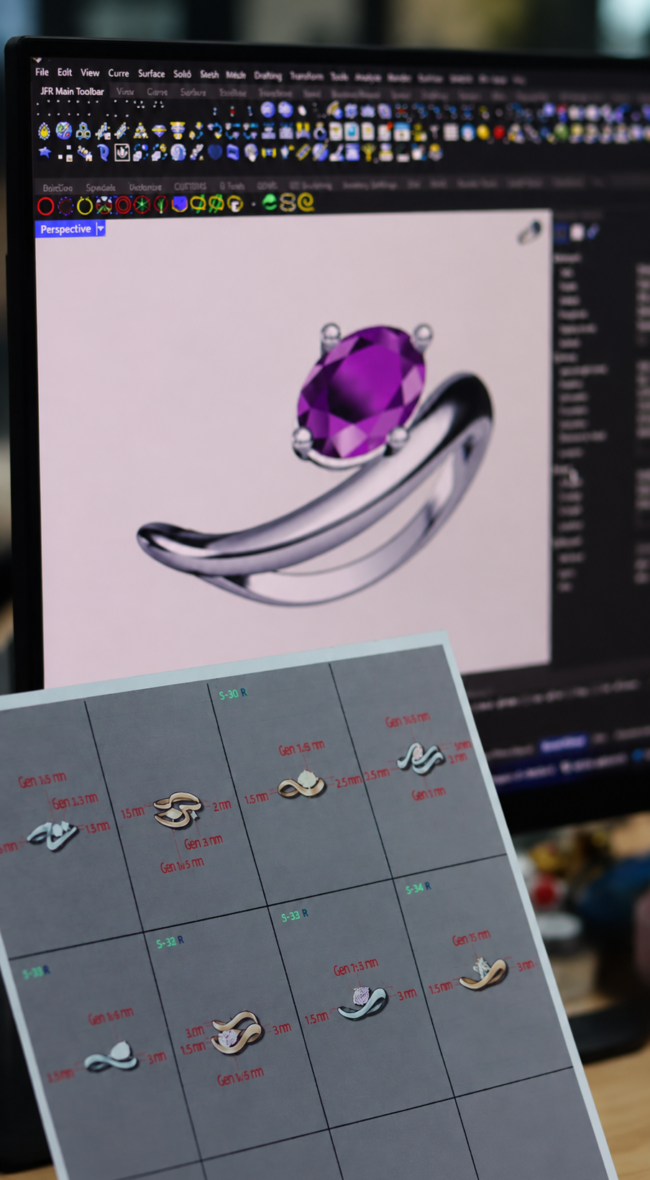
Duration: 10-15 Days
Output: Production-ready CAD and confirmed technical details
Once the design direction has been confirmed, we move into technical development. If you do not already have a CAD file, our team can create one based on the agreed design and specifications. If you already have CAD, we can review your file to determine whether it is suitable for production.
During the review, we look at areas such as:
We may discuss:
- Overall structure
- Product dimensions
- Stone size and stone seats
- Stone-setting method
- Assembly points
- Strength and durability
- Possible casting or finishing risks
- Areas that may be difficult to polish or plate
A design can look correct visually but still require technical adjustment before it can be manufactured reliably. That is why CAD review is an important production step, not simply a design service.
About Design Revisions
Minor adjustments during CAD development are completely normal.
For example, you may want to slightly change:
- A curve
- A stone position
- A proportion
- A thickness
- A dimension
- A small construction detail
These kinds of refinements are part of the normal development process. However, major or repeated changes to the core design can significantly increase development time. For example, if the customer approves one concept and later changes the shape, construction, stone arrangement, or overall direction, the CAD may need to be partially or completely rebuilt. CAD should ideally be used to refine and engineer a clear design for production, rather than repeatedly redesigning the product from the beginning.
Already Have Production-Ready CAD?
If your CAD file and technical specifications are already complete, this stage may be much shorter. Our team can review the file, check whether it is suitable for production, suggest technical adjustments if required, and send the final version back to you for confirmation. If everything is already correct, we can move directly toward printing or sampling.
Why Good CAD Takes Time
Jewelry CAD is not only about creating a shape that looks right on screen. The CAD becomes the technical foundation for everything that follows. Small details such as thickness, spacing, curves, stone seats, joints, tolerances, and connection points can directly affect: Casting quality, Stone setting, Assembly, Polishing, Plating, Product strength, Comfort, and Final appearance. For this reason, CAD development should be done carefully and accurately. We want the digital model to represent the intended product as closely as possible before it moves into physical production.
03
Resin Model
(Your Design, Nearly Real)
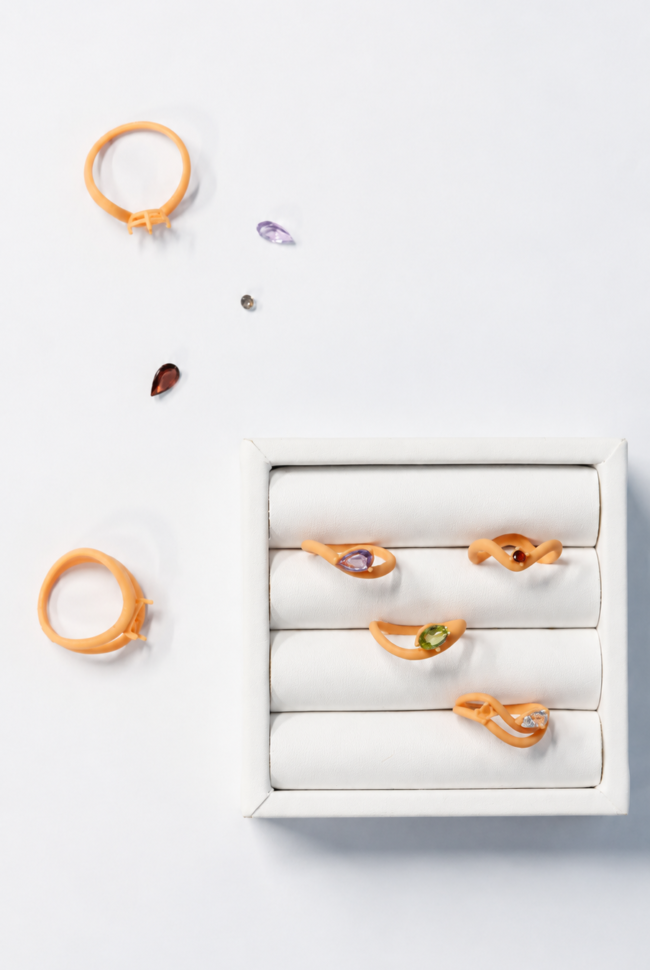
Duration: 1-5 Days
Output: Confirm the Design Before Casting
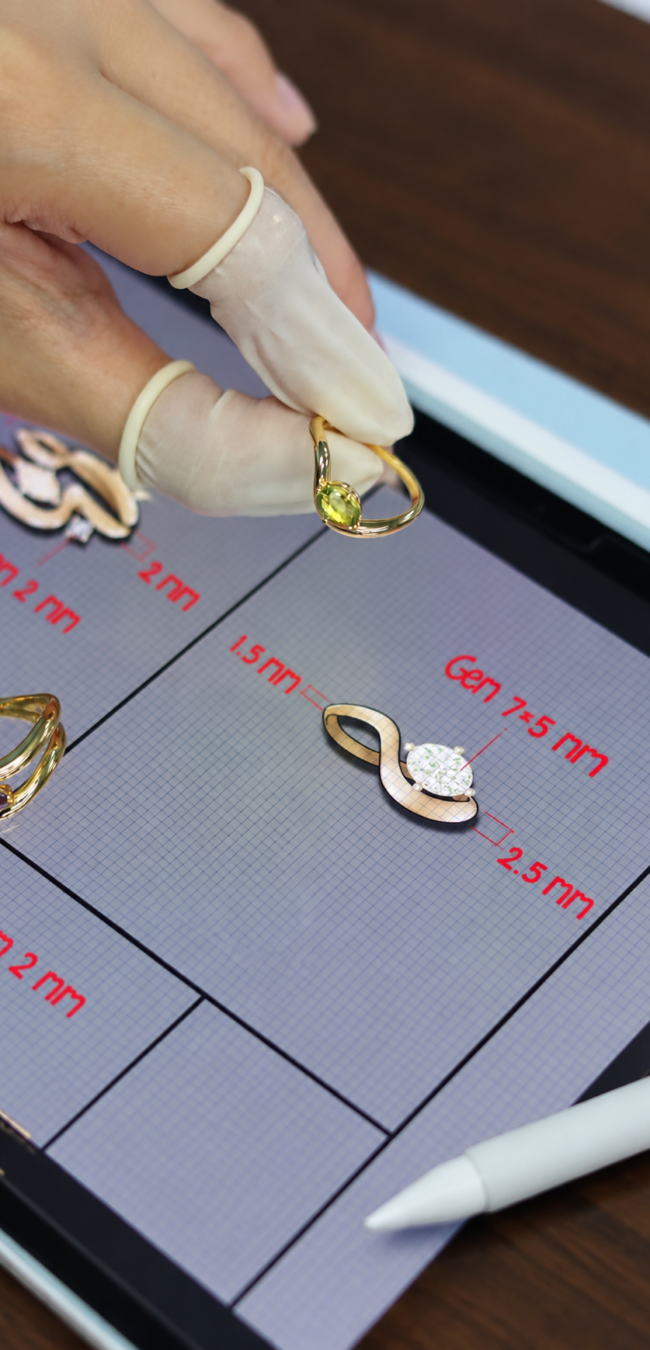
Once the CAD is approved, we can create a physical resin model using 3D printing. This is one of the most useful checkpoints in the development process because it allows you to see the product at its actual scale before the piece is cast in metal.
A resin model allows you to review:
- Overall size
- Proportion
- Shape
- Thickness
- Volume
- Construction
- Position of components
- Stone placement
- How the piece looks when held or worn
Your Last Major Design Checkpoint
In many cases, this allows you to evaluate most of the physical design before committing to metal production. We strongly recommend confirming the major design details at the CAD and resin-model stage. Once the piece has been cast in metal, structural or dimensional changes become much more difficult.
A major change after casting may require:
- Revising the CAD
- Printing another resin model
- Casting a new sample
- Additional labor
- Additional finishing
- Another sample review
In some cases, the entire sample process may need to begin again. For this reason, the resin model is generally the last stage where significant changes to the structure or dimensions are recommended.
Why This Matters
A design can look very different on a computer screen compared with how it feels in real life. A pendant may feel larger than expected, a ring may look too heavy, an earring may sit differently when worn, or a connection may appear thicker than expected.
The resin model allows you to identify and correct these details before committing to metal production. At this stage, changes are still relatively simple: we can adjust the CAD and print a revised model if needed. This helps avoid unnecessary casting, material use, additional labor, repeated sampling, and lost production time. It is much faster and more cost-effective to correct the design in resin than after it has already been cast in metal.
04
Sample
(Where Your Design Comes to Life)
Duration: 10-15 Days
Output: Approved production sample and finalized standard specifications
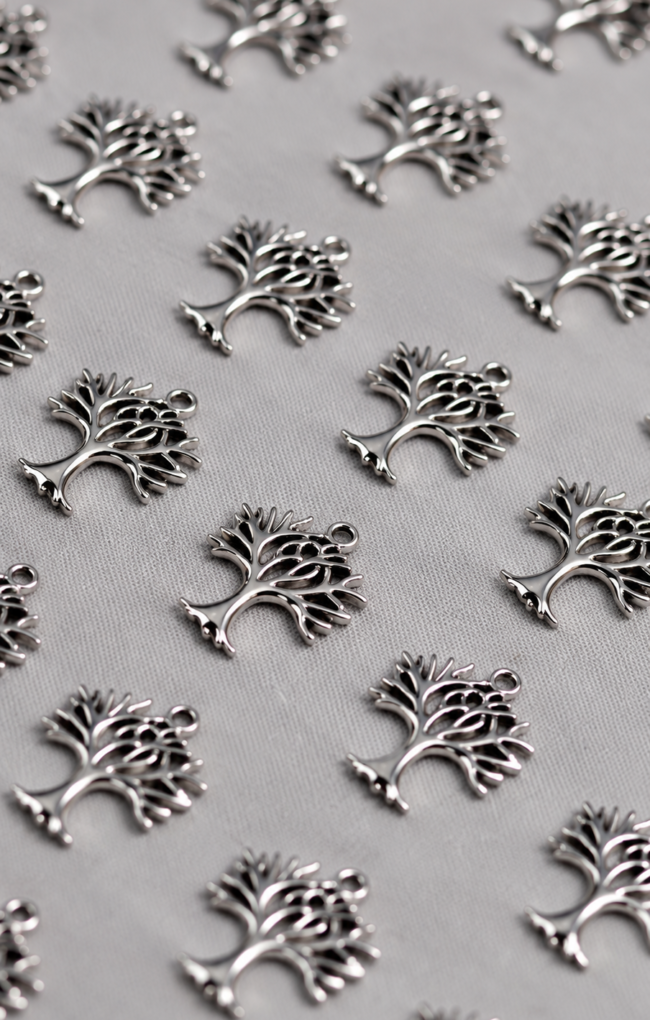
Once the CAD and resin model have been confirmed, we proceed to produce the jewelry in the actual material. This is where the design becomes a finished physical piece that closely represents what you should expect from bulk production. The pre-production sample gives you the opportunity to review areas that cannot be fully judged from CAD or resin alone.
You can evaluate:
- Actual metal appearance
- Final weight
- Plating color
- Surface finish
- Texture
- Polishing
- Stone quality
- Stone setting
- Assembly
- Movement
- Clasps or mechanisms
- Comfort
- Functionality
- Overall workmanship
- Final appearance
This stage is mainly about confirming how the product should be made and finished, rather than redesigning the product from the beginning.
What Can Still Be Adjusted?
At this stage, adjustments to areas such as the following may still be practical:
- Plating color
- Surface finish
- Polishing
- Stones
- Minor assembly details
- A small construction detail
However, major structural changes are generally not recommended. If the design itself needs to change significantly, we may need to return to CAD development and produce another sample. Revision requests can therefore extend the development timeline depending on the type and scale of the changes requested.
Already Have an Existing Product or Sample?
If you already have a finished product that you would like us to reproduce, you may not need to go through the full development process. When no major design changes are required, we can use your existing piece as the production reference, create the necessary production mold, and produce one sample for you to compare with the original and approve before bulk production begins. This allows us to confirm that the reproduced piece meets the expected appearance, dimensions, construction, finish, and overall quality before scaling production. If only minor adjustments are required, we can review whether they can be made during this process.
If you would like to significantly modify the design, dimensions, construction, stone arrangement, or other key details, we recommend returning to Stage 01 — Design & Brief Confirmation so the revised product can be properly developed and approved before production.
Why This Matters
The approved sample becomes one of the most important references for bulk production. Once you approve the sample, our production and QC teams can use it together with the confirmed specifications as the standard for the order. They may compare areas such as: Appearance, Dimensions, Construction, Stones, Plating, Finish, Assembly, Functionality, Overall workmanship. Once approved, the sample becomes the physical standard for bulk production, giving both you and our factory a clear reference for how the finished product should look, feel, and perform.
05
Bulk Production &
Ready for Delivery
Duration: 21–45 Days
Output: Finished, inspected, and carefully packed jewelry ready for delivery
Once the final sample, quotation, specifications, and deposit are approved, bulk production begins. Your order is then manufactured according to the confirmed design, materials, dimensions, plating, finish, construction, and quality standard.
Depending on the product, production may include: Mold Making, Wax Production, Casting, Cutting and Preparation, Soldering, Assembly, Stone Setting, Polishing, Surface Finishing, Plating, Functional Testing, Quality Inspection, Final Cleaning, and Packing. (See full bulk production process)
Not every product follows exactly the same production route. The actual process depends on the design, construction, material, and required finish.
First Bulk Production May Take Longer
The first production run of a new product usually requires more preparation (approximately: 30-45 Days) than a repeat order because we are not only making the order as we are also establishing a stable production process for future runs. For many designs, we need to create production molds and fine-tune the mold construction, casting arrangement, assembly sequence, stone-setting method, finishing process, production tolerances, and QC checkpoints.
A method that works well for one sample may still need adjustment when the same design is produced in larger quantities. This first production run allows us to identify the most reliable way to reproduce the approved sample consistently across tens, hundreds, or thousands of pieces. The extra preparation at this stage helps create a more controlled, repeatable, and efficient production standard for future orders.
Repeat Production Is Usually Faster
Once the molds, production method, specifications, finishing process, and QC standard have been established, repeat orders normally move more efficiently. For established designs, a typical repeat production lead time is approximately: 21–30 Days
The actual lead time still depends on:
- Order quantity
- Product complexity
- Material availability
- Stone availability
- Plating requirements
- Finishing requirements
- Current production queue
Why This Matters
Bulk production is not simply about making a larger quantity. The objective is to reproduce the approved design and quality standard consistently across the full order. The more carefully the production method is established, the easier it becomes to maintain consistency from piece to piece.
Create Jewelry You'll Be Proud to Put Your Name On
Have an idea, sketch, CAD file, existing sample, or complete tech pack? Share your project with our team, and we will help you find the right path from development to production.
Expert Guidance
Practical support from concept review through production.
Flexible Ways to Begin
Start with a consultation, sample, or small trial order.
Quality You Can Trust
Jewelry made to your approved design and quality standards.
GET A FREE
CONSULTATION!
Share your idea. We'll show you the best way to bring it to life.

13+ Years
Shop with Trusted expertise.

30+ Specialists
Expert craftsmanship

30+ Countries
Trusted worldwide

Made Responsibly
Respect behind every piece!